Selected enterprise work
Retail Robotics & Planogram Mapping
The Home Depot | Zippedi integration
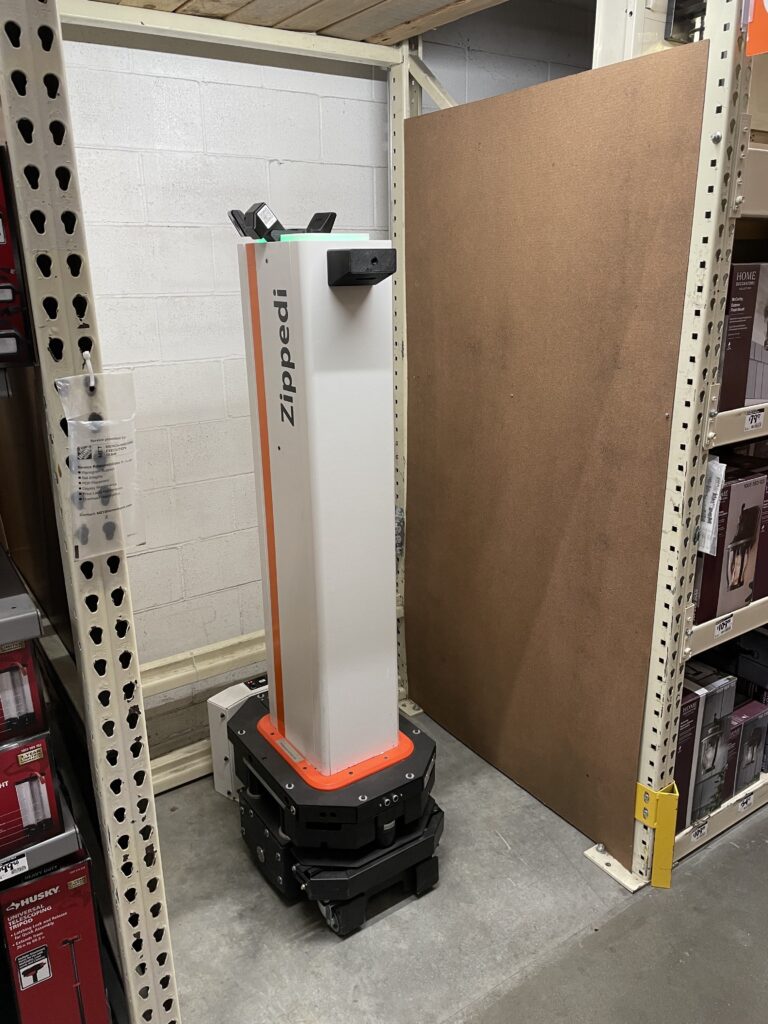
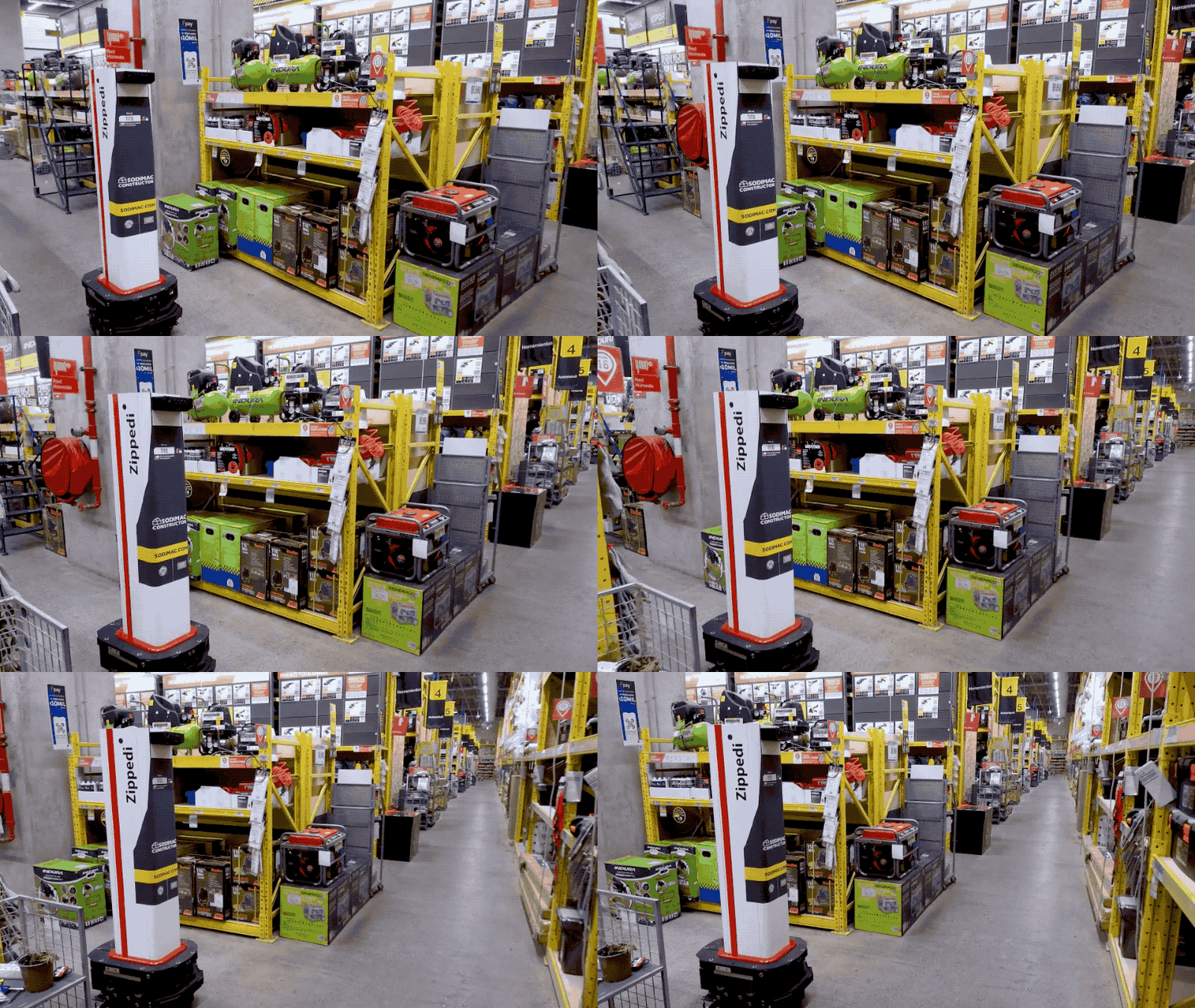
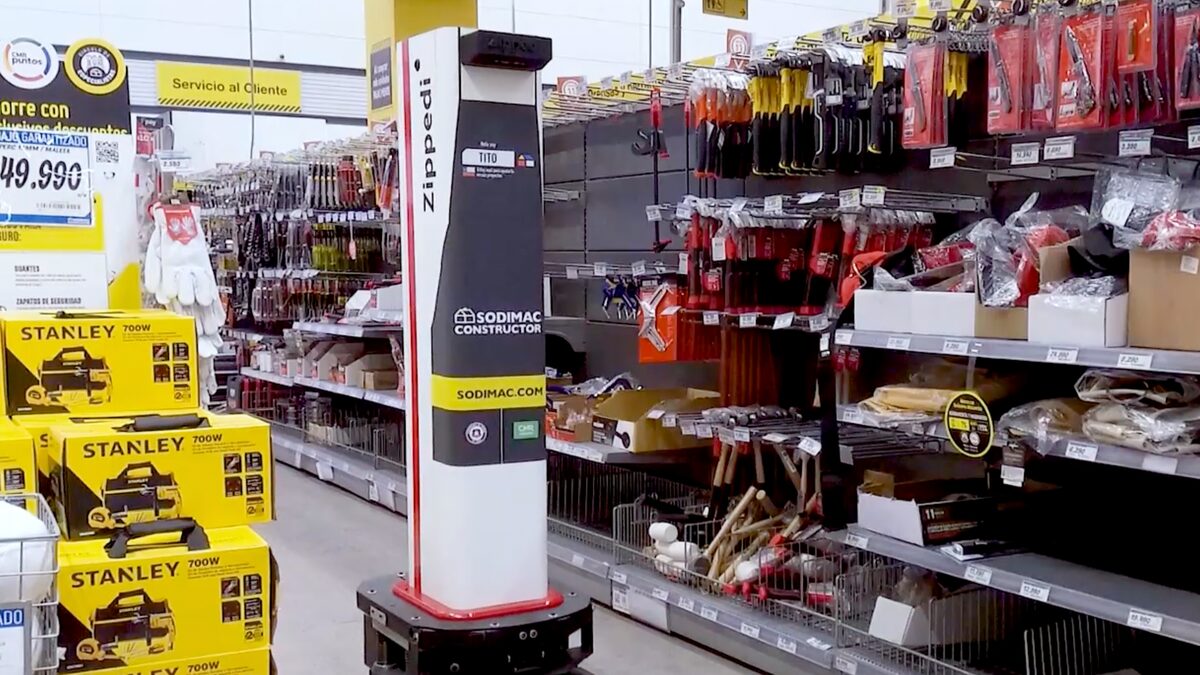
I developed the matching layer that connected imagery captured by autonomous retail robots to The Home Depot's representation of a physical store. The work translated camera observations into aisle, bay, shelf, planogram, and expected-product context.
The problem
Three systems described the same shelf differently.
A camera could record what it saw. A planogram could describe what products were expected and where. Store-layout data could describe the building's physical organization. For the imagery to become useful, those representations had to resolve to the same real-world location.
My work sat at that boundary: determining where an observation belonged in the store and associating it with the correct section of the expected layout.
My contribution
From camera frame to planogram position.
- Mapped robot-generated shelf imagery to The Home Depot's store-layout domain.
- Connected observations to aisle, bay, shelf, and planogram positions.
- Reconciled location information across vendor and internal representations.
- Linked physical shelf context to the products expected at that location.
Conceptual workflow
Turning visual observations into store context.
This public-safe diagram shows the problem domain, not The Home Depot's proprietary architecture or implementation.
- 01Capture
An autonomous robot records shelf imagery and location metadata.
- 02Normalize
Location inputs are translated into a common store model.
- 03Match
Each observation is associated with a candidate planogram region.
- 04Contextualize
The image gains aisle, bay, shelf, and expected-product meaning.
Engineering perspective
What this work demonstrates.
Domain translation
Connected an emerging vendor platform to an established enterprise retail model.
Physical-digital mapping
Resolved digital observations against the structure of a real, changing environment.
Data reconciliation
Created useful context where identifiers and location assumptions did not naturally align.
Operational usefulness
Focused integration work on making robot-derived information meaningful to store systems.
Public case-study boundary
Enterprise work, responsibly presented.
This work was completed as a Home Depot employee. The description and diagrams intentionally omit proprietary source code, internal architecture, store data, implementation details, performance metrics, and confidential operational information.
Public background